
Can African Athletes Make History at Future World Athletics Championships

Can African Athletes Make History at Future World Athletics Championships?
Can African Athletes Make History at Future World Athletics Championships?
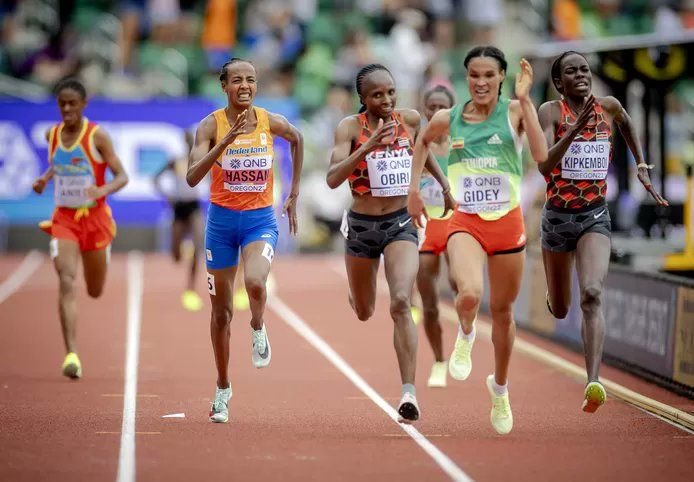
African athletics is entering an important period, with athletes from across the continent continuing to make their mark on the international stage. From Kenya’s dominance in distance running to Nigeria’s sprint and hurdles tradition and Botswana’s growing influence in sprinting, African athletes are increasingly competing for major global honours.
The story could become even bigger in the coming years. World Athletics has confirmed that Nairobi, Kenya, will host the 2029 World Athletics Championships, making it the first time the global championships will be held on African soil. The 2027 edition will take place in Beijing, China, before the championships move to Nairobi in 2029.
With this new chapter approaching, can African athletes use the opportunity to produce some of the most memorable performances in the history of the championships?
Africa Already Has a Strong Athletics Tradition
Africa has produced some of the world’s most successful distance runners, sprinters and field-event athletes.
Kenya and Ethiopia have traditionally been particularly successful in middle- and long-distance events. Kenya’s record at the World Athletics Championships reflects that history, with the country ranked second among the most successful nations in championship history.
At the 2025 World Championships in Tokyo, Kenya won seven gold medals and 11 medals overall, finishing second on the medal table.
That record provides a strong foundation for future championships.
However, African athletics is no longer limited to distance events.
Sprinting Is Becoming Increasingly Important
One of the most interesting developments is the growth of African sprinting.
Botswana’s Letsile Tebogo has become one of the leading names in African sprinting. His emergence has helped draw greater attention to the continent’s potential in the 100m and 200m events. The Olympics recently highlighted Tebogo’s position among Africa’s leading sprinters as he continues competing on the international circuit.
Nigeria also continues to produce athletes capable of competing at the highest level.
At the 2026 African Athletics Championships in Accra, Cameroon’s Emmanuel Eseme won the men’s 100m, while Nigeria’s Chidera Ezeakor finished third. In the women’s 100m, Cameroon’s Herverge Kole Etame won gold, with Nigeria’s Rosemary Chukwuma taking silver.
These performances demonstrate the depth of sprinting talent across the continent.
Nigeria Has Another Generation Coming Through
Nigeria’s athletics programme is also entering a new phase.
Tobi Amusan remains one of the country’s best-known international athletes, while younger athletes are emerging in sprinting and hurdles.
Recent qualification developments have already provided an indication of Nigeria’s ambitions for Beijing 2027. Tobi Amusan, Kayinsola Ajayi and Ezekiel Nathaniel have secured automatic qualification for the 2027 World Championships, while three Nigerian relay teams have also secured qualification places.
Having experienced athletes combined with emerging competitors could give Nigeria several opportunities to challenge for medals at future championships.
The key will be maintaining development programmes that allow promising athletes to progress from continental competitions to the global stage.
Kenya’s Distance Running Remains a Major Strength
Kenya’s biggest traditional advantage remains distance running.
The country continues to produce elite marathoners, cross-country runners and track athletes. Recent performances underline the depth of that talent.
Agnes Ngetich, for example, recently set a women’s-only half-marathon world record of 1:05:15 at the World Athletics Road Running Championships in Copenhagen. She finished 50 seconds ahead of compatriot Veronica Loleo.
Ngetich’s performance is another reminder that Kenya continues to produce athletes capable of competing at record-breaking levels.
The challenge for Kenya will be converting that depth into continued success at global championships while also developing talent in events outside distance running.
Nairobi 2029 Could Change the Story
The decision to award the 2029 World Athletics Championships to Nairobi is historic.
World Athletics described the decision as the first time its flagship championships will be held in Africa. Nairobi has already hosted major athletics competitions, including the 2017 World U18 Championships and the 2021 World U20 Championships.
Hosting the championships could have a major effect on athletics across the continent.
African athletes will compete in front of home crowds, while younger athletes will have the opportunity to see some of the world’s best competitors without travelling outside Africa.
The event could also encourage greater investment in athletics facilities, coaching and youth development.
Qualification Will Still Be a Major Challenge
African athletes will still face a demanding qualification process.
For the 2027 World Championships in Beijing, World Athletics has introduced a qualification system combining entry standards and world rankings. Approximately 40% of athletes are expected to qualify through entry standards, while about 60% will qualify through world rankings.
This means athletes need more than one exceptional performance.
Consistency across the qualification period can be crucial, particularly for athletes who do not have regular access to the highest-level international competitions.
For African federations, providing athletes with opportunities to compete in strong international meetings could therefore become increasingly important.
Relay Events Offer Another Opportunity
African countries could also make progress in relay events.
Botswana’s development in sprinting has already demonstrated how one country’s rise can strengthen the continent’s presence in short-distance events.
The 2026 World Athletics Relays in Gaborone were another important development. The first 48 relay teams qualified for Beijing 2027 through the competition, showing the importance of relay programmes in the qualification system.
Strong relay teams can give African nations additional opportunities to reach global finals and compete for medals.
Young Athletes Could Shape the Future
Perhaps the most important factor is the emergence of younger athletes.
Africa has a large and diverse population, creating a significant potential talent pool. The challenge is turning that potential into sustainable elite-level success.
That requires investment in coaching, facilities, sports science, medical support and competition opportunities.
Major events such as the Dakar 2026 Youth Olympic Games could also play a role in identifying and developing young African athletes. Senegal is becoming the first African country to host an Olympic sporting event on the continent when Dakar stages the Youth Olympic Games.
Can African Athletes Make History?
The answer will depend on several factors, including athlete development, access to international competition and the ability of national federations to support emerging talent.
But the signs are significant.
Kenya remains a major force in distance running. Nigeria continues to produce high-level sprinters and hurdlers. Botswana has established itself as an increasingly important sprinting nation, while athletes from other African countries are also making progress.
The arrival of the World Athletics Championships in Nairobi in 2029 adds another important dimension.
For African athletes, the next few championships could represent more than opportunities to win medals. They could help demonstrate the depth of athletics talent across the continent and inspire another generation to pursue the sport.
With Beijing 2027 approaching and Nairobi 2029 already confirmed, the next chapter of African athletics is beginning to take shape.